Chemical Reactors: A Comprehensive Guide to Design, Materials, and Manufacturing
Chemical reactors are the cornerstone of modern industrial chemical processing, serving as controlled environments where chemical reactions occur at scale. These sophisticated vessels play a crucial role across various industries, from pharmaceuticals and petrochemicals to food processing and biotechnology. We will dive into some of the key aspects of chemical reactors that make them indispensable to modern manufacturing.
Understanding Chemical Reactors
At their core, chemical reactors are specialized vessels designed to contain and control chemical reactions. They provide precise control over critical parameters such as temperature, pressure, concentration, and flow rates, ensuring optimal conditions for desired chemical transformations.
Applications Across Industries
Chemical reactors find applications in numerous sectors:
Pharmaceutical manufacturing for drug synthesis
Petrochemical processing for fuel production
Polymer production for plastics and synthetic materials
Food and beverage processing
Biotechnology for enzyme production
Fertilizer manufacturing
Types of Chemical Reactors
Different processes require different reactor designs, with the most common types being:
Batch Reactors
These vessels process materials in discrete batches, making them ideal for small-scale production and research applications. All reactants are introduced simultaneously and processed for a specified period before the desired product is extracted.
Plug-Flow Reactors
These tubular reactors process materials continuously with minimal back-mixing, making them excellent for reactions that are sequential in nature.
Continuous Stirred Tank Reactors (CSTR)
CSTRs operate continuously, with reactants flowing in while products are withdrawn simultaneously. They feature constant agitation to maintain uniform mixing and consistent reaction throughout the process.
Materials of Construction
The selection of appropriate materials for chemical reactor construction is crucial for ensuring longevity and safety. Stainless steel has emerged as a preferred material due to its:
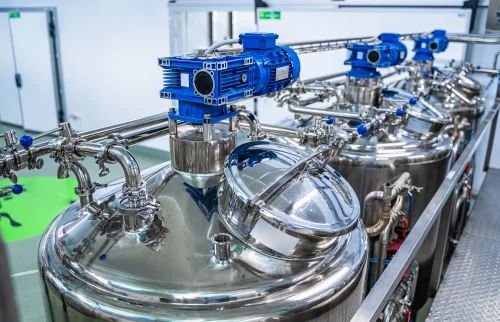
Superior corrosion resistance leading to longer life
Excellent durability under high temperatures and pressures
Easy maintenance and cleaning
Compatibility with various chemical substances
Different grades of stainless steel along with other alloys and exotic material may be selected based on process requirements and corrosiveness of the reactions conducted.
Fabrication Techniques and Challenges
Manufacturing chemical reactors requires precision and expertise. Key fabrication considerations include:
Surface Preparation
Proper surface preparation is crucial for ensuring corrosion resistance and longevity. Some of the techniques include:
Sandblasting for contaminant removal
Chemical treatments for surface enhancement
Proper cleaning protocols before welding
Welding Processes
Welding must be performed with utmost precision to ensure structural integrity and prevent potential weak points. Critical factors include:
Selection of appropriate welding techniques (TIG, MIG)
Proper heat control to prevent material distortion
Rigorous quality control measures are essential for ensuring reactor safety and reliability:
Testing Protocols
Hydrostatic pressure testing
Leak detection tests
Non-destructive examination (NDE) of welds
Material composition verification
Dimensional accuracy checks
Compliance Standards
Manufacturers must adhere to various international standards:
ASME Boiler and Pressure Vessel Code
Pressure Equipment Directive (PED)
API Standards
ISO Quality Management Systems
Future Trends
The chemical reactor industry continues to evolve with emerging trends:
Increased focus on continuous processing and digital monitoring systems.
Enhanced emphasis on sustainability
Development of hybrid reactor designs
Integration of Industry 4.0 practices
Conclusion
Chemical reactors remain fundamental to modern industrial processes, with their design and manufacture requiring careful consideration of materials, fabrication techniques, and quality control measures. As industries continue to evolve, innovations in reactor design and manufacturing will play a crucial role in meeting future challenges.
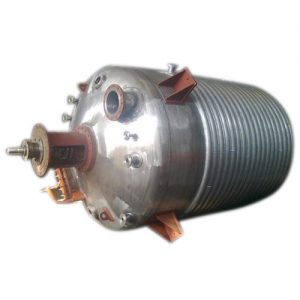
The stainless steel reactor is composed of the kettle body, the cauldron cover, the jacket, the agitator, the transmission device, the shaft sealing device and the support, etc. When the height of the mixing device is large, the multi layer impeller can be used, and it can also be selected according to the requirements of the user. The clamp sleeve is set outside the wall of the kettle, or the heat exchange surface is set in the device, and the heat transfer can also be carried out through the external circulation. Support seat has support type or ear type support. Gear reducer should be used more than 160 rotating speed. The number, specification or other requirements of opening can be designed and made according to the requirements of the user.
1. usually in normal pressure or low pressure conditions of packing seal, the general use of pressure less than 2 kilograms.
2. in general medium pressure or vacuum condition, mechanical seal will be adopted, and the general pressure is negative pressure or 4 kilograms.
3. under high pressure or high volatile medium, the magnetic seal will be used, the general pressure is more than 14 kilograms. In addition to the use of water cooling for magnetic seals, other sealing forms will increase the cooling water jacket over more than 120 degrees.
Stainless steel reactor is widely used in petroleum, chemical, rubber, pesticide, dye, medicine, food, pressure vessel to complete vulcanization, nitration, hydrogenation, alkylation, polymerization, condensation process, such as reactor, reaction pot, pot, decomposition polymerization kettle; material generally have carbon steel, stainless steel, zirconium nickel (Hastelloy, Monel, Kang Ni) alloy and other composite materials.
Classification of reactor
1, according to the heating / cooling way, it can be divided into electric heating, hot water heating, heat conducting oil circulation heating, far-infrared heating, outer (inner) coil heating, jacket cooling and coil cooling inside the kettle. The selection of the heating mode is mainly related to the heating / cooling temperature required by the chemical reaction and the size of the heat required.
2, according to the body material can be divided into stainless steel autoclave, stainless steel and stainless steel reactor glass lined stainless steel autoclave (enamel stainless steel reactor), steel lined stainless steel reactor.
Use attention of stainless steel reactor
Stainless steel reactor is a kind of reaction equipment, must pay attention when operating, otherwise it will cause damage for many reasons, cause production to stop. The operation of the stainless steel reactor should be paid attention to in many aspects.
First of all, we must strictly follow the rules and regulations to operate the stainless steel reactor.
Secondly, before operation, should carefully check whether the abnormal, in normal operation, not to open the lid and touch the wiring board of the terminal, so as to avoid the electric shock; non pressure operation; nitrogen pressure test process, careful observation of the pressure gauge, to test pressure, close the nitrogen valve switch immediately; the heating speed is not too fast, the pressure should be slow, especially the stirring speed, allowing only slow speed.
Finally, when the body of the kettle is heated to a higher temperature, do not contact the body of the kettle to avoid scalding; it should be cooled first after the experiment. Not fast cold, in order to prevent the damage caused by large temperature difference pressure. At the same time, the power supply should be pulled out in time.
At the same time, after the use of the stainless steel reactor, we should pay attention to the maintenance, so that the autoclave can have better service life.
Installation and operation specification of stainless steel reactor
1. The autoclave should be placed indoors. When it is equipped with a number of autoclave, it should be placed separately. Every operating room should have direct access to the outdoors or passages, and the equipment should be kept in good air.
2, installed on the kettle cover, should prevent the kettle cover sealing surface are mutually bump. When the cauldron is placed in a fixed position on the body of the kettle carefully, when the main nut is tightened, it must be gradually tightened on the diagonal and symmetrical parts. Force to be uniform, not allow the cauldron to tilt to one side, in order to achieve a good sealing effect.
3, positive and negative nut connection, only the pros and cons of nut, two circular sealing surface may be relatively rotated, all nut connector assembly, should be coated with lubricating oil.
4, needle type valve line seal, only gently rotate the valve needle, press tight cover, can achieve good sealing effect.
5. Use the revolving body on the autoclave to check the flexibility of the operation.
6, the controller should be put on the operation platform. The working environment temperature is 10-40 degrees, the relative humidity is less than 85%, and the surrounding medium does not contain conductive dust and corrosive gas.
7, check whether the movable parts and fixed contacts on the panel and rear panel are normal, pull the upper cover, check whether the contact of the connector is loose or not, and whether there is any damage or rust caused by poor transportation and storage.
8, the controller should be reliably grounded.
9. Connect all the wires, including the power line, the electric furnace line between the controller and the kettle, the electric motor line and the temperature sensor and the tachometer wire.
10, the “power supply” air switch on the panel should be closed, and the digital display should be displayed.
11, set various parameters on the digital display board (such as upper limit alarm temperature, working temperature, etc.), then press the “heating” switch to connect the electric stove, and at the same time, “heating” the indicator light on the switch. Adjusting the “pressure regulating” knob can adjust the heating power of the electric furnace.
12, press the “mixing” switch, stirring motor power, and “mixing” light switch on the light, the “slow speed” knob, the motor rotates slowly, observe whether the motor is transferred, without error, stop hanging belt, restart.
13. After the operation is finished, it can be cooled naturally, cooled by water or placed in the air over the bracket. Until the temperature drop, re released with gas pressure vessel, the pressure to atmospheric pressure (the pressure gauge shows zero, then the main nut) symmetric even loosened, and then remove the main nut, then carefully remove the kettle cover is arranged on a bracket.
14. After each operation, the remnants of the cauldron and the cauldron should be removed. The main seal should be cleaned regularly and kept clean and not allowed to be wiped with hard or surface rough objects.
Examination of stainless steel reactor
1, listen to the sound speed reducer and a motor drive is normal, temperature reducer, motor, touch base bearing parts: general temperature are less than 40, the highest temperature are less than 60 (can hand over 8 seconds is normal in).
2, check the oil leakage of the reducer frequently, whether the shaft seal is intact, see whether the oil pump is oiling, check the change of the oil level and the oil quality in the deceleration box, whether there is oil in the sealing box of the kettle, and add or update the corresponding oil if necessary.
3, check the safety valve, explosion-proof membrane, pressure gauge, thermometer and other safety devices are sensitive and easy to use, safety valve, pressure gauge is checked, and the seal intact, the pressure gauge line be drawn correctly, whether the internal leakage explosion-proof membrane;
4, often listen to the stainless steel reactor, there is no abnormal vibration and sound.
5, keep the mixing shaft clean and see the light, to the axis of the round nut, check whether the rotation direction of the mixing shaft is rotated in clockwise direction, and the reversal is strictly prohibited.
6, check the agitator, snake tube and other accessories in the pot regularly, fasten the loose bolt, and replace the related parts when necessary.
7, check the stainless steel reactor all the import and export valve is well available, if there is a problem must be handled in time;
8, check the flange of the stainless steel reactor and the seat and so on without the bolt loosening, and the safety cover is good and reliable.
9, check whether the stainless steel reactor body has cracks, deformation, bulging, perforation, corrosion, leakage and so on.
10. To make the equipment hygienic well, to ensure the non oil pollution and the equipment to see the equipment.
Maintain of stainless steel reactor
(1): stainless steel reactor device should be installed in accordance with the requirements of the high pressure explosion-proof operation room, in the equipment of multiple stainless steel reactor, should be placed separately, each of the two separated explosion-proof wall between the application of safety, each operation room shall be communicated to the outside channel and the outlet, when there is explosive medium should guarantee the equipment good ventilation.
(2) if the equipment is damaged after opening the package, the equipment is installed according to the structure of the equipment, and the equipment is checked in accordance with the packing list. If the heating mode is heat conduction oil heating, please use the corresponding heat conduction oil according to the usage temperature (notice: the heat conducting oil is not allowed to contain moisture). When adding, the upper part of the jacket will be opened and the oil level opening of the upper part of the jacket will be opened. Refueling through the gas port, to the oil level of the mouth to flow oil, then the oil level mouth screwed to death, do not screw the gas mouth to death in order to avoid pressure.
(3) the installation and seal of the kettle body and the lid. The kettle body and the lid of the kettle cover with gaskets or conical surfaces to contact with the arc surface, so that they can compress each other by tightening the main nut to achieve a good sealing effect. When the nut is tightened, it must be diagonally symmetrical and gradually tighten and tighten several times. It does not allow the cauldron to tilt to one side so as to achieve a good sealing effect. When the main nut is tightened, it shall not exceed the specified tightening torque 40~120N.M range to prevent the dense cover from crushing or overloading. The sealing surface should be specially cherished. Wipe the clean up and down cover with soft paper or cloth before installation. Pay special attention not to touch the scar on the sealing surface of the kettle body and the lid. If the operation is reasonable, more than ten thousand times can be used. After the sealing surface is damaged, the reprocessing and repairing party should be able to achieve good sealing performance. When the cauldron is dismantled, the cauldron should be lifted slowly up and down to prevent the collision between the seal surface of the cauldron and the cauldron. If the seal is sealed with gaskets (tetrafluoroethylene, aluminum pad, copper pad, asbestos pad, etc.), a good sealing effect can be achieved by tightening the main nut.
(4) valve, pressure gauge, safety valve installation and by tightening the nut, namely, to achieve the effect of sealing, the sealing surface of the arc connecting two no relative rotation of all screw connection parts in the assembly, shall apply lubricant or oil mixed with graphite, so as not to kill. The use of valves: needle valve line seal, just need to lightly rotate the valve needle, tighten the sealing surface, that is, it can achieve good sealing performance, prohibit overexertion, so as not to damage the sealing cover.
(5) equipment after installation of nitrogen into a certain amount of pressure for 30 minutes, check for leaks, if there is leakage please use soap for pipeline, pipe leak out, off gas tight, again adding nitrogen pressure test, to ensure no leakage after the start of work.
(6) when cooling, cooling water in the cooling coil available, prohibit cooling to prevent excessive thermal stress caused by the cooling coil, the kettle body crack. When the temperature of the kettle is over 100 degrees C, the water jacket between the magnetic stirrer and the cauldron should be cooled by cooling water to ensure that the water temperature is less than 35 degrees C, so as to avoid the magnetic steel degaussing.
(7) safety device: the arch arch metal rupture disc is made of stainless steel and manufactured according to the national standard GB567-89 “arched metal blasting technology condition”. It has been well tested at factory and can not be adjusted at will. If has been blasting, for renewal, replacement period is determined by the use of units according to the actual situation of the unit, for more than a nominal bursting pressure of the bursting disk without blasting should be replaced, often use the best not more than 80% of the lower limit pressure of blasting, blasting replacement should pay attention to the convex piece.
(8) after the reaction, the first cooling the gas in the reactor through a pipeline leak to the outside, so that the pressure inside the autoclave to atmospheric pressure, no disassembly, the main bolt and nut symmetrically loosen unloaded, and then carefully remove the kettle cover (or rising from the kettle cover is arranged on a bracket) that special attention should be paid to protect the sealing surface cover unloading process.
(9) in tank cleaning: each operation is completed with a cleaning solution (using the cleaning liquid should pay attention to avoid the corrosion of the main material) to remove the kettle body and the sealing surface residue, often should clean and keep clean, do not allow for cleaning hard substances or articles with rough surface